What you need
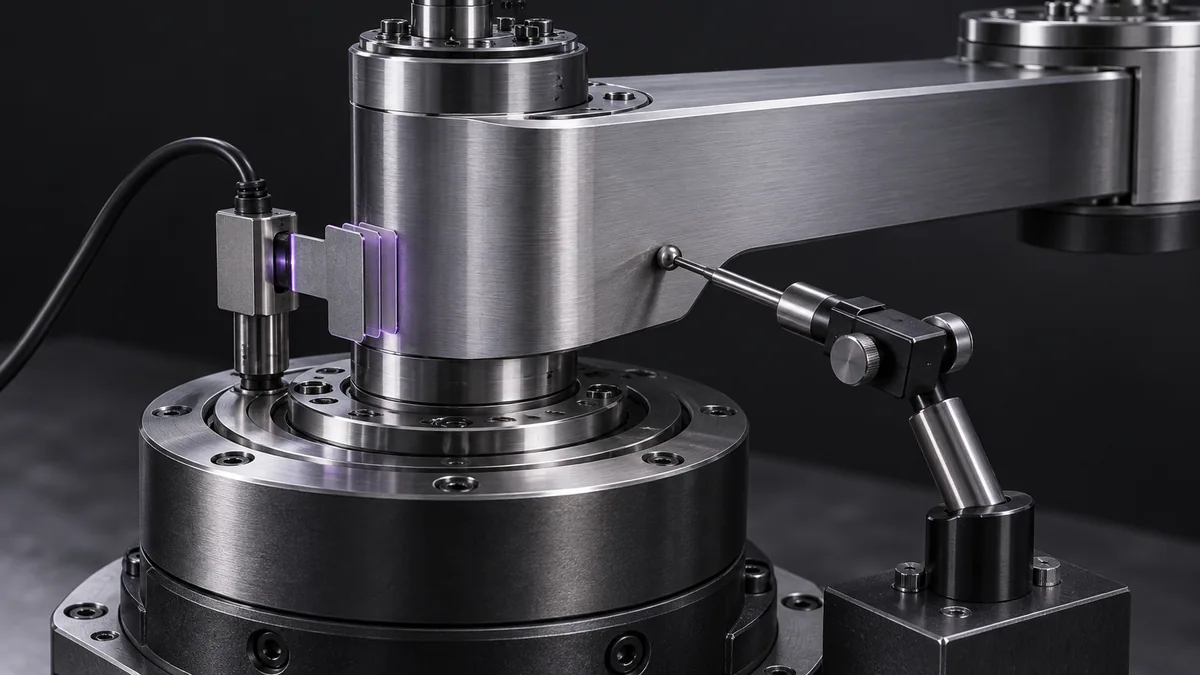
Use an independent angle or displacement instrument and a guarded, low-energy axis test. Keep payload and speed consistent.
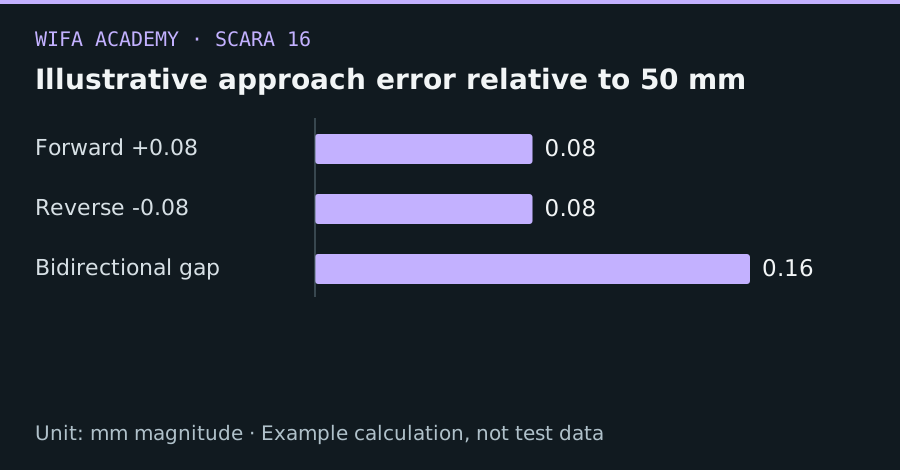
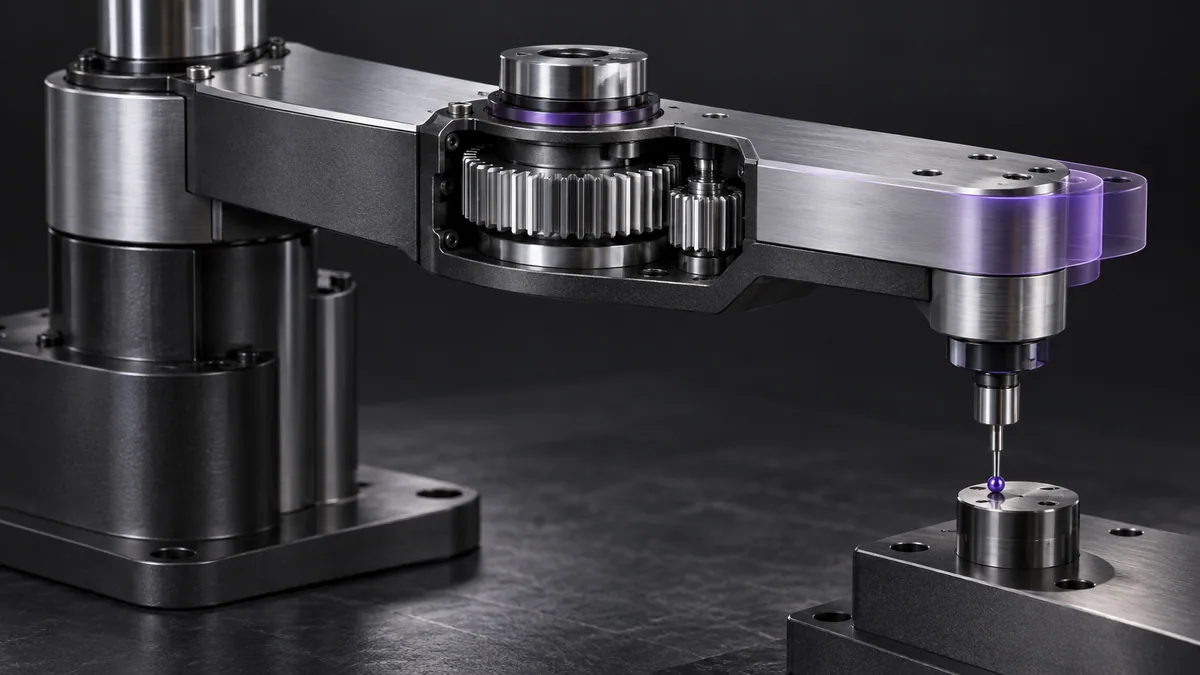
Read the diagram as a data table
| Condition or component | mm magnitude |
|---|---|
| Forward +0.08 | 0.08 |
| Reverse -0.08 | 0.08 |
| Bidirectional gap | 0.16 |
The calculation
b ≈ |x_forward − x_reverse|
b is observed bidirectional difference at the measurement point. It may include compliance and friction as well as mechanical backlash.
Worked example
If repeated forward approaches average 50.08 mm and reverse approaches average 49.92 mm, the difference is 0.16 mm. A midpoint correction would not eliminate that direction-dependent separation.
Try it step by step
- Choose a repeatable target and approach it from each direction with enough prior travel to engage the transmission consistently.
- Collect several readings per direction and compare means and within-direction scatter.
- Repeat at different loads and positions to see whether compliance or friction changes the result.
- Inspect mechanical causes before introducing compensation, and validate any correction over the full intended motion pattern.
How to check the result
A successful fix reduces the bidirectional difference without creating overshoot or instability when the path reverses.
Common mistake to avoid
Do not call every direction-dependent error backlash. A flexible arm, sticky bearing or uneven cable force can produce similar symptoms.
Reference reading
Primary references for the underlying models, APIs or application context. The worked numbers and plots above are educational calculations, not results reported by these sources.