What you need
Use a task worksheet, representative parts and measurements of the intended workspace. Include operators and maintenance needs in the discussion.
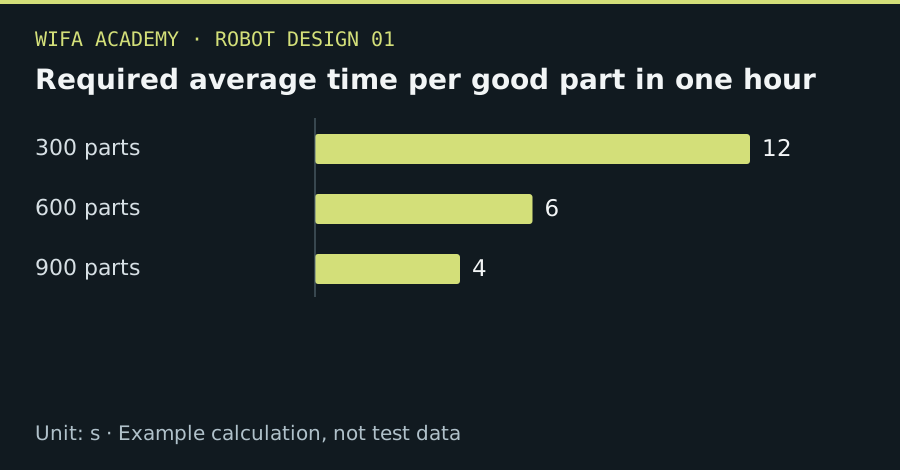
Read the diagram as a data table
| Condition or component | s |
|---|---|
| 300 parts | 12 |
| 600 parts | 6 |
| 900 parts | 4 |
The calculation
t_available_per_part = available_time / required_good_parts
Use matching time units. Available time excludes the downtime you explicitly remove; define that boundary before calculating.
Worked example
A requirement for 600 good parts in 3,600 available seconds allows 6 s per good part on average. A 5 s motion cycle may still fail if replenishment and rejects add enough losses. This is a requirement calculation, not a throughput guarantee.
Try it step by step
- Write payload, dimensions, orientations, reach and placement tolerance with units and a clear measurement method.
- Define the operating environment, product variants and what the robot must do when input is missing or ambiguous.
- Separate mandatory requirements from preferences and record assumptions that still need measurement.
- Assign a verification method to each requirement before committing to a mechanical design.
How to check the result
Another engineer should be able to decide whether a prototype passes each requirement without guessing what words such as fast or precise mean.
Common mistake to avoid
A list of components is not a specification. Avoid selecting a motor first and quietly changing the task to fit it.
Reference reading
Primary references for the underlying models, APIs or application context. The worked numbers and plots above are educational calculations, not results reported by these sources.