What you need
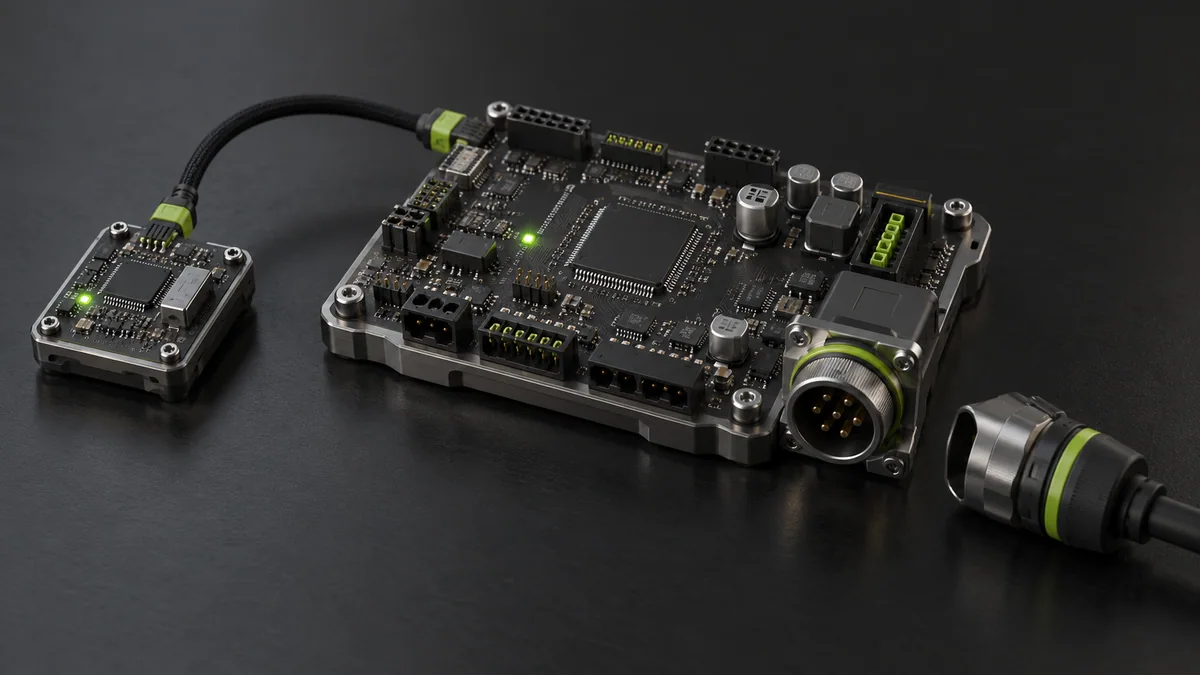
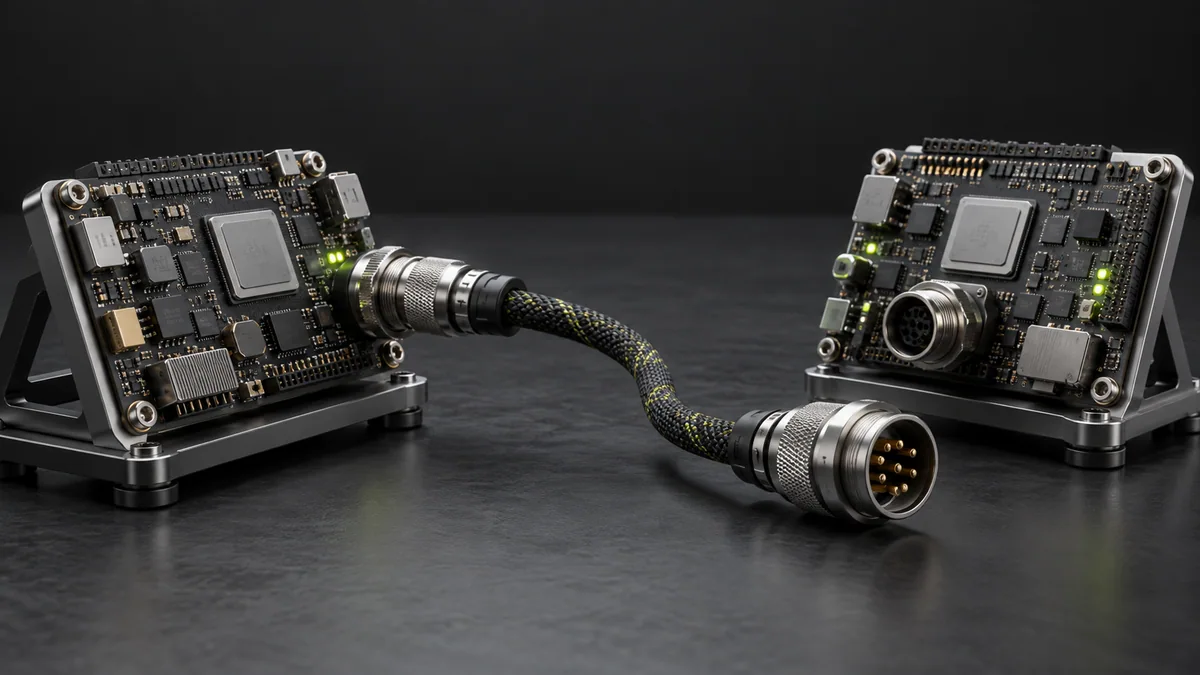
Use two offline scripts or loopback serial data and a documented protocol layout. Keep the parser disconnected from actuators during testing.
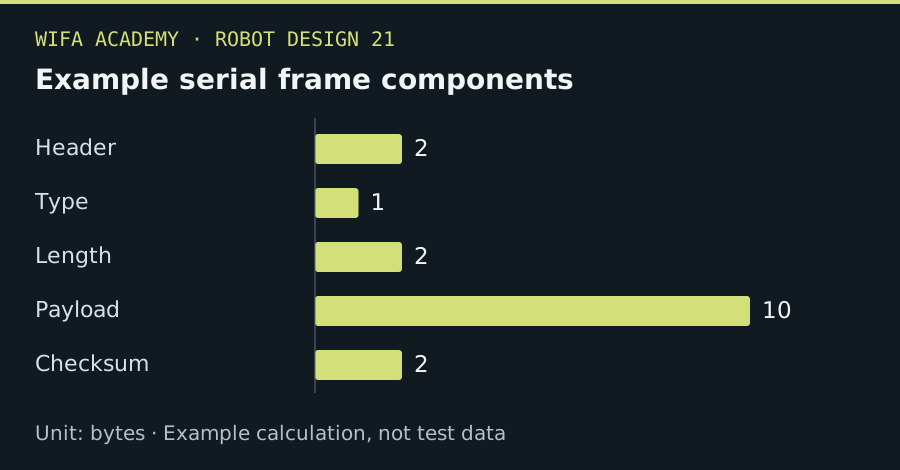
Read the diagram as a data table
| Condition or component | bytes |
|---|---|
| Header | 2 |
| Type | 1 |
| Length | 2 |
| Payload | 10 |
| Checksum | 2 |
The calculation
frame_bytes = header + type + length + payload + checksum
All terms are byte counts. A checksum detects some corruption; it does not authenticate the sender or establish safe command semantics.
Worked example
A frame with 2 header bytes, 1 type byte, 2 length bytes, 10 payload bytes and 2 checksum bytes totals 17 bytes. At 115,200 baud with 8N1 framing, ideal wire time is 170/115200 = 1.476 ms, excluding delays.
Try it step by step
- Define byte order, maximum payload length, checksum algorithm and exactly which bytes the checksum covers.
- Build a parser that waits for a complete bounded frame and rejects invalid length, type or checksum without executing a command.
- Inject truncated, duplicated, corrupted and concatenated frames, including header-like bytes inside payloads.
- Add sequence identifiers and application-level range checks where needed, then document timeout and resynchronization behavior.
How to check the result
The parser must never read beyond its buffer or turn a partial frame into a valid actuator command.
Common mistake to avoid
CRC protection is not encryption or authentication. For networked or untrusted links, use appropriate authenticated protocols and authorization in addition to framing.
Reference reading
Primary references for the underlying models, APIs or application context. The worked numbers and plots above are educational calculations, not results reported by these sources.