What you need
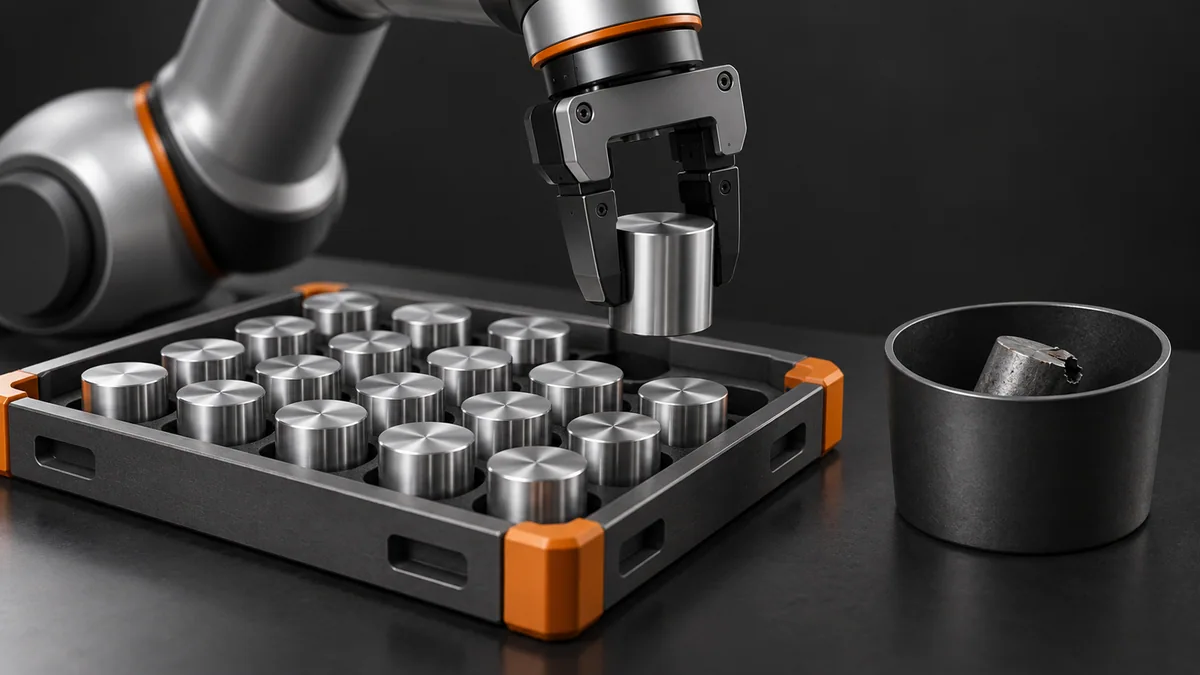
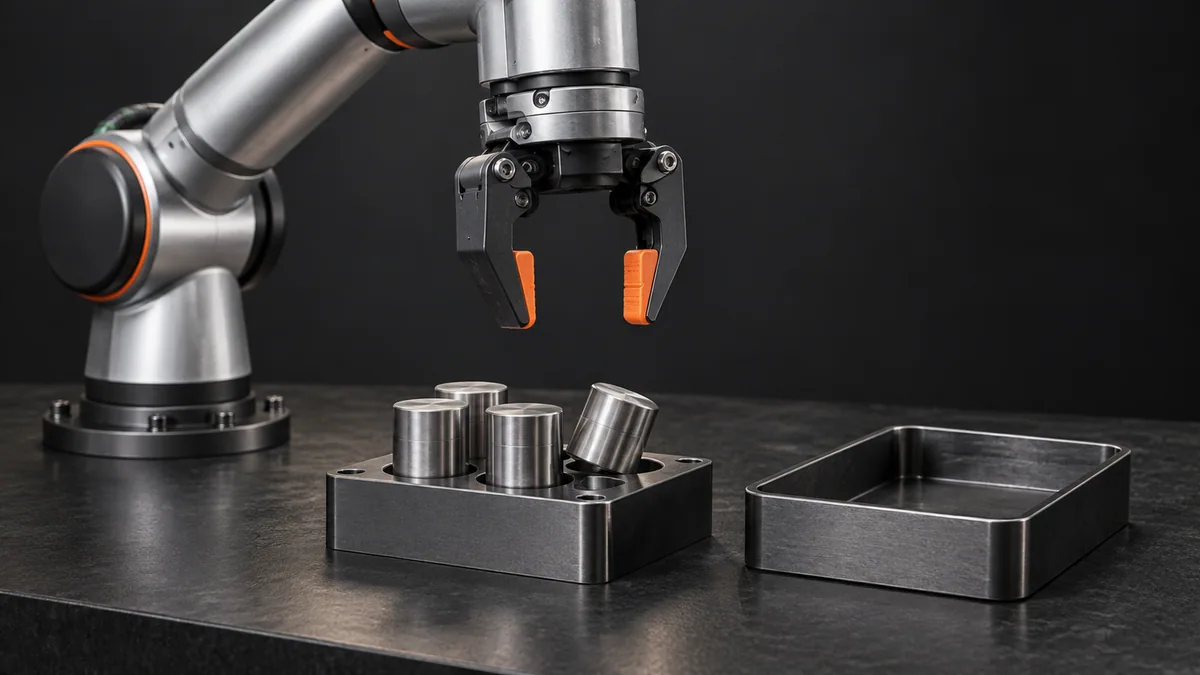
Use a process simulator with injected missed-grasp events. Keep retry behavior out of safety-reset logic.
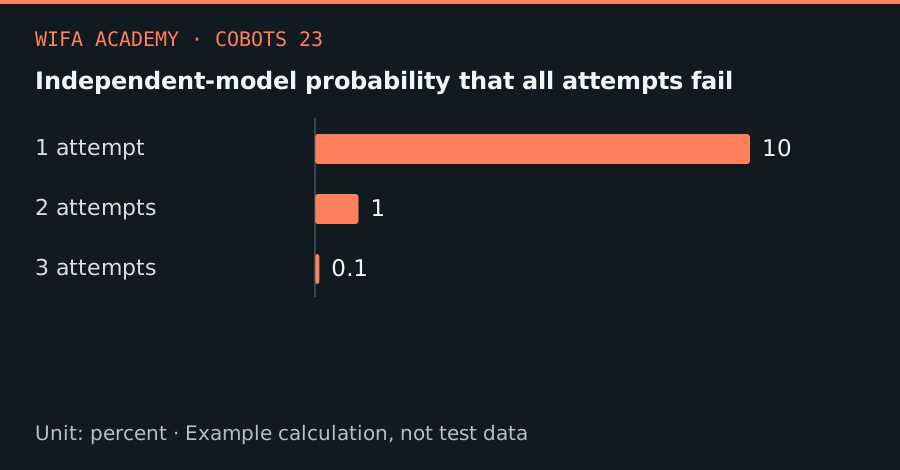
Read the diagram as a data table
| Condition or component | percent |
|---|---|
| 1 attempt | 10 |
| 2 attempts | 1 |
| 3 attempts | 0.1 |
The calculation
P(all fail) = p^n
p is failure probability per attempt and n is total attempts, but the expression assumes independent attempts with unchanged probability.
Worked example
For a hypothetical independent 10% miss probability, three total attempts give 0.1³ = 0.001, or 0.1% all-fail probability. A shifted fixture creates correlated failures; repeating the same motion may provide no improvement at all.
Try it step by step
- List failure types that permit a retry and those that require inspection, such as an unknown dropped-part location.
- Define a verified empty-tool state and clear recovery pose before another pick is attempted.
- Set an explicit total-attempt limit and elapsed-time limit, then simulate continuous failure to prove termination.
- Log the original fault and every retry; a cycle that succeeds only after repeated attempts should remain visible to maintenance.
How to check the result
Repeated injected faults must lead to a stable, documented fault state with no unbounded motion or automatic safety reset.
Common mistake to avoid
Do not present p^n as a reliability claim unless independence is supported. Retrying a jam, collision or safety trip without diagnosis is inappropriate.
Reference reading
Primary references for the underlying models, APIs or application context. The worked numbers and plots above are educational calculations, not results reported by these sources.