What you need
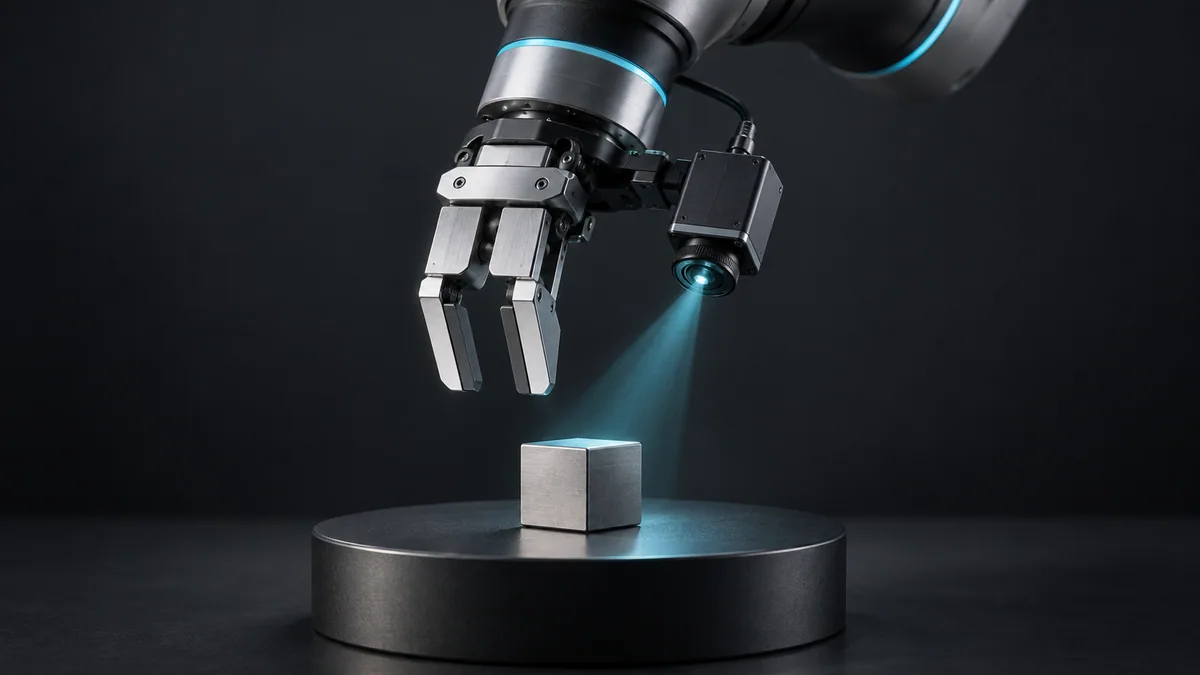
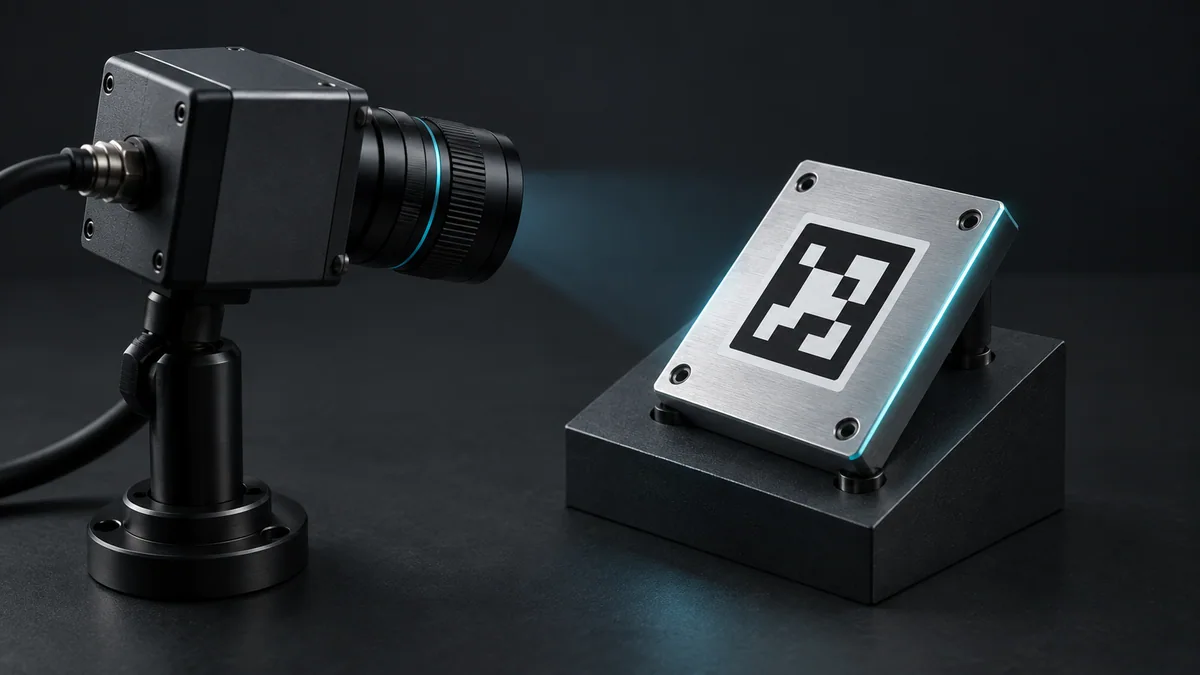
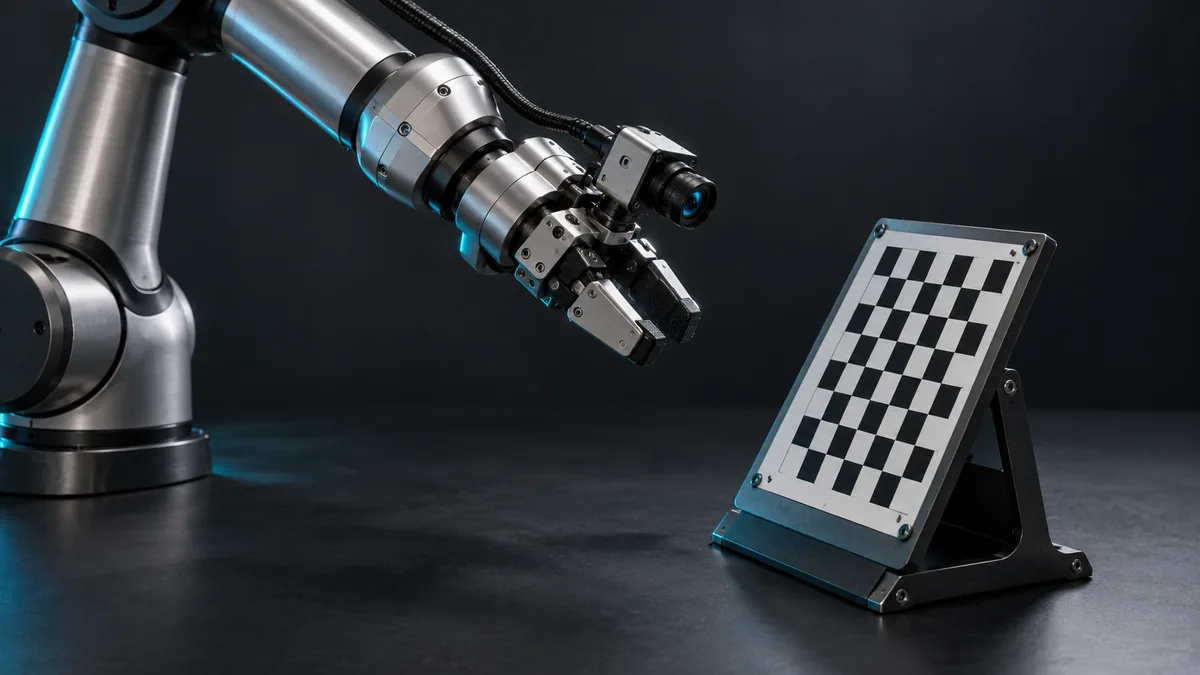
Use the supported calibration workflow, a rigid target and synchronized robot-pose and image records. Plan all robot motion in simulation first.
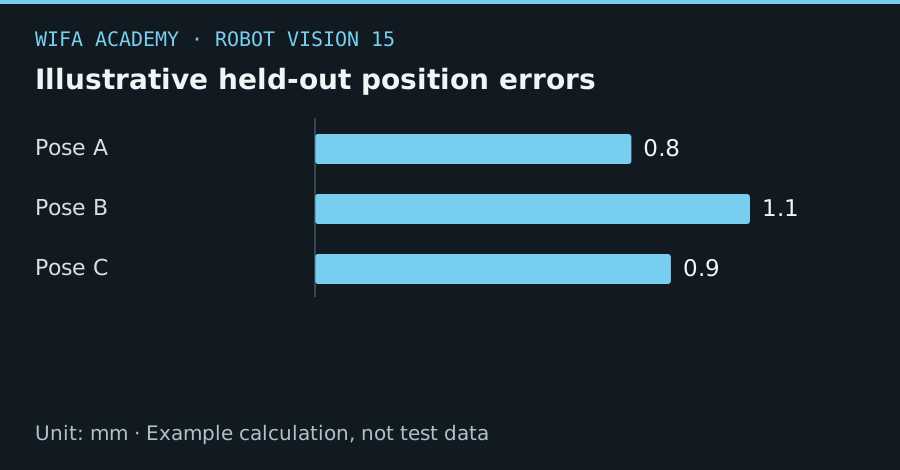
Read the diagram as a data table
| Condition or component | mm |
|---|---|
| Pose A | 0.8 |
| Pose B | 1.1 |
| Pose C | 0.9 |
The calculation
A × X = X × B
A and B describe paired relative motions under a chosen convention; X is the fixed hand–eye transform. Exact input directions depend on the solver API.
Worked example
Suppose held-out target errors are 0.8, 1.1 and 0.9 mm after calibration. Their mean is 0.933 mm and maximum 1.1 mm. These invented values illustrate reporting; they are not results for any camera or robot.
Try it step by step
- Read the solver’s input-frame definitions and write a table mapping each logged pose to the required direction and units.
- Plan varied orientations and translations while keeping the target visible and maintaining all tool and cable clearances.
- Pair each image with the robot pose at exposure time, reject blurred detections and fit the hand–eye transform.
- Validate on additional poses by mapping the same physical target into the base frame and checking consistency.
How to check the result
Report held-out positional and angular residuals over the intended working region, and revalidate after any camera-mount change.
Common mistake to avoid
Low reprojection error does not prove accurate hand–eye calibration. Timing errors and flexible mounts can dominate the final robot target.
Reference reading
Primary references for the underlying models, APIs or application context. The worked numbers and plots above are educational calculations, not results reported by these sources.